
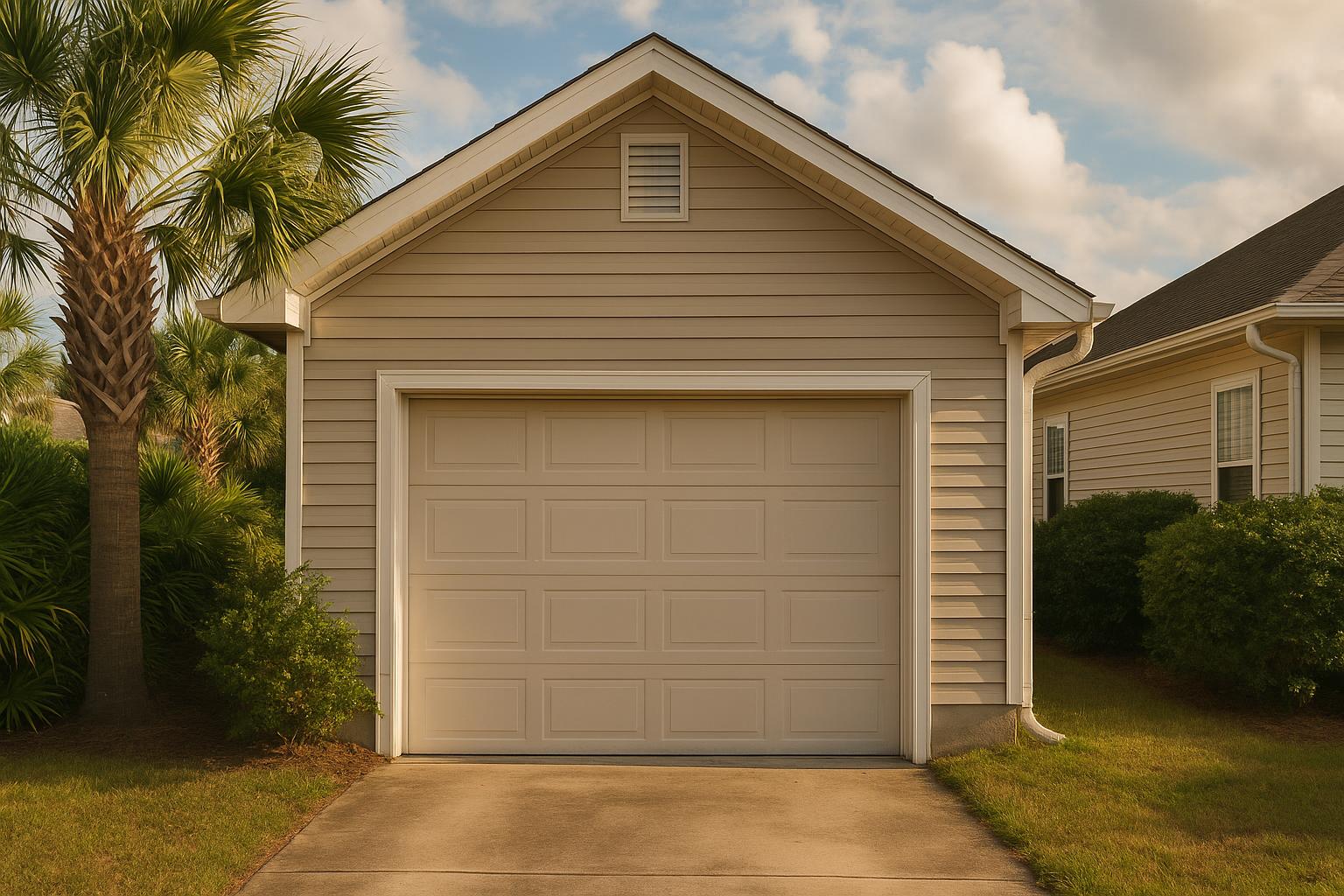
Your Garage Door vs. Jacksonville's Coastal Climate
Living near the coast in Jacksonville, NC comes with plenty of perks — but it also means your home faces unique weather challenges that inland areas don't deal with. One part of your home that takes a surprising amount of abuse from the elements is your garage door. As the largest moving component of your house, your garage door is constantly exposed to heat, humidity, salt air, and seasonal storms.
Understanding how Jacksonville's climate affects your garage door can help you stay ahead of costly repairs and extend the life of your investment. Here's what every local homeowner should know.
Heat and Sun Exposure
Summers in Jacksonville are long and hot, with temperatures regularly climbing into the 90s. That intense sun exposure affects your garage door in several ways:
- Warping and expansion: Wooden garage doors are especially vulnerable to heat. Prolonged exposure to direct sunlight can cause panels to warp, crack, or expand, making the door difficult to open and close properly.
- Fading and peeling paint: UV rays break down paint and finish over time. If your garage door faces south or west, you may notice fading, chalking, or peeling much sooner than expected.
- Thermal stress on metal components: Steel and aluminum doors handle heat better than wood, but metal springs, tracks, and hinges still expand in extreme heat. This can throw off the door's balance and put extra strain on your opener.
To combat heat damage, consider choosing a garage door with a UV-resistant finish and scheduling periodic inspections during the summer months. A fresh coat of exterior-grade paint every few years can also go a long way toward protecting wooden doors.
Humidity and Moisture
Jacksonville's humidity levels are consistently high, especially from late spring through early fall. That persistent moisture creates problems that many homeowners don't notice until significant damage has already occurred.
- Rust and corrosion: Metal springs, rollers, hinges, and tracks are all susceptible to rust when exposed to constant humidity. Corroded springs are weaker and more likely to snap without warning — a dangerous and expensive problem.
- Swelling wood: Wooden garage doors absorb moisture from the humid air, causing them to swell. This can make the door stick in its tracks or create gaps that let even more moisture inside your garage.
- Mold and mildew: The combination of warmth and moisture creates ideal conditions for mold growth, particularly along the bottom seal and weatherstripping of your garage door.
Regular lubrication of all metal parts with a silicone-based lubricant is one of the simplest and most effective ways to fight humidity-related wear. Homeowners in areas like Sneads Ferry and Swansboro, where proximity to the water amplifies moisture levels, should be especially vigilant about this maintenance step.
Salt Air Corrosion
One of the biggest threats to garage doors in our area is something you can't even see — salt air. The salty breeze that rolls in from the coast accelerates corrosion on metal components far faster than normal humidity alone.
Here's what salt air does to your garage door system:
- Pitting on steel doors: Even galvanized steel can develop small pits and surface rust when constantly exposed to salt-laden air.
- Degraded springs and cables: Torsion and extension springs lose their integrity faster in coastal environments. What might last 10,000 cycles inland could fail significantly sooner near the coast.
- Corroded opener chains and rails: If your garage door opener uses a chain drive, salt air can cause the chain and rail to corrode, leading to noisy operation and eventual failure.
If you live in a coastal community like Hubert or Sneads Ferry, consider upgrading to corrosion-resistant hardware. Stainless steel or powder-coated components hold up much better against salt exposure. You might also want to ask about belt-drive openers, which eliminate the metal chain altogether.
Storms and Wind Damage
Hurricane season is a reality of life in eastern North Carolina. From June through November, Jacksonville residents need to be prepared for tropical storms and hurricanes that can bring destructive winds, heavy rain, and flying debris.
Your garage door is one of the most vulnerable points of your home during a storm. Here's why:
- Wind pressure: A standard garage door can buckle under high wind pressure, especially if it wasn't designed or reinforced for storm conditions. Once the garage door fails, wind enters your home and can cause catastrophic structural damage from the inside out.
- Debris impact: Flying branches, lawn furniture, and other debris can dent, puncture, or shatter garage door panels.
- Water intrusion: Heavy rain driven by strong winds can overwhelm weatherstripping and bottom seals, flooding your garage and damaging anything stored inside.
Storm Preparation Tips
- Invest in a wind-rated garage door. If your current door isn't rated for high winds, consider upgrading to one that meets Miami-Dade or Florida Building Code wind load standards — a smart investment for any coastal Carolina home.
- Install a bracing kit. If a full replacement isn't in the budget, a vertical bracing kit can reinforce your existing door against wind pressure.
- Inspect weatherstripping before storm season. Replace cracked or worn seals to minimize water intrusion during heavy rain events.
- Keep your door maintained. A garage door that's already struggling with worn springs, misaligned tracks, or a failing opener is far more likely to fail during a storm.
Seasonal Temperature Swings
While Jacksonville doesn't experience the extreme cold of northern states, winter temperatures can still dip into the 30s and 40s. These fluctuations between hot summers and cool winters cause repeated expansion and contraction in your garage door's materials and hardware.
Over time, this cycle can loosen bolts and brackets, cause weatherstripping to crack, and affect the tension in your springs. A preventive maintenance visit in the fall — before the cooler months set in — can catch these issues early and keep your door operating smoothly through winter.
Protecting Your Investment Year-Round
The best defense against weather-related garage door damage is a consistent maintenance routine. Here's a simple seasonal checklist for Jacksonville homeowners:
- Spring: Inspect and lubricate all moving parts. Check for rust or corrosion after the wet winter months.
- Summer: Look for paint fading, warping, or heat-related damage. Test the door's balance and auto-reverse safety features.
- Fall: Replace worn weatherstripping. Tighten all hardware. Schedule a professional tune-up before storm season ends and winter begins.
- Winter: Monitor the door for sticking or sluggish operation in cold weather. Keep the tracks clean and free of debris.
If you're not comfortable performing these checks yourself, or if you spot something that doesn't look right, it's always worth calling in a professional. A small maintenance visit now can prevent a major repair bill later.
We're Here to Help Jacksonville Homeowners
At Jacksonville Garage Door Specialists, we understand the unique challenges that our coastal climate presents. Whether you need a routine tune-up, spring replacement, or want to upgrade to a storm-rated garage door before the next hurricane season, our team is ready to help. We serve homeowners throughout Jacksonville, Richlands, Midway Park, and the surrounding communities with honest, dependable service.
Don't wait for the weather to cause a problem — contact us today to schedule an inspection and make sure your garage door is ready for whatever Mother Nature throws at it.